Is It Legal to Swim With Dolphins in Florida?
Asking is it legal to swim with dolphins in Florida gets two different answers depending on which dolphins you mean. With the wild animals that live off Anna Maria Island: no, and the law is unusually clear about it. With trained animals at a licensed captive facility: yes, and that is a regulated attraction rather than a wildlife encounter. This guide covers what the Marine Mammal Protection Act actually prohibits, what counts as harassment, what the penalties are, and what a boat or a kayak may legally do when a pod comes over. Current as of July 2026.
Quick answer
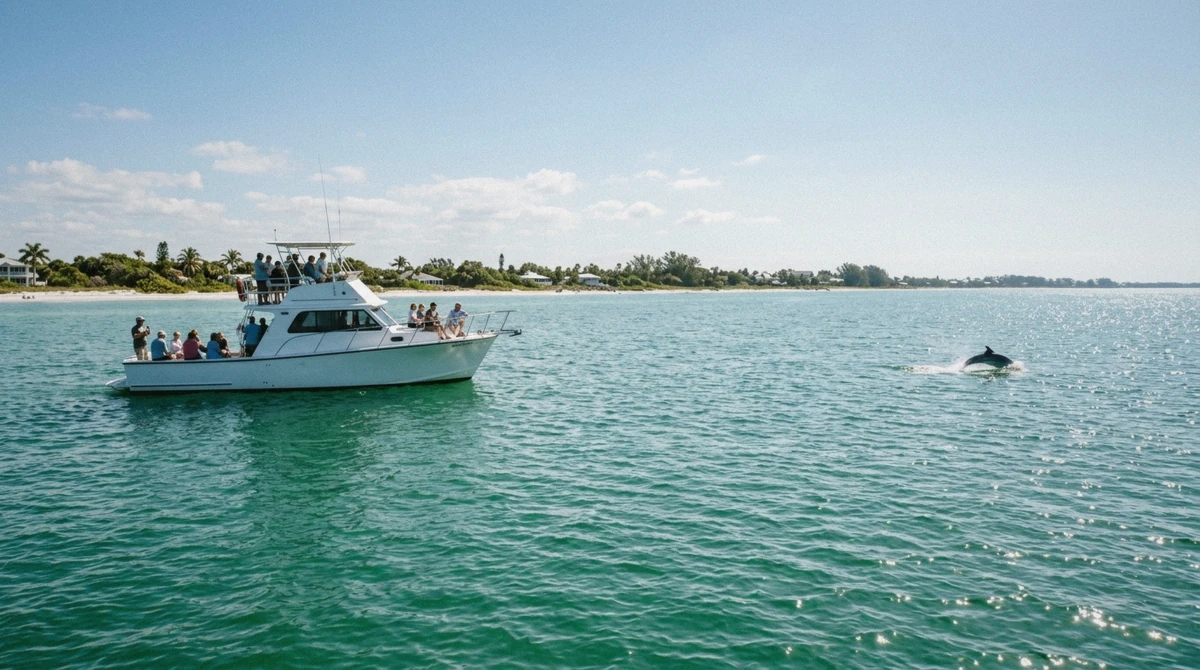
Swimming with wild dolphins in Florida is not legal in any practical sense. The Marine Mammal Protection Act prohibits harassment, and federal wildlife authorities treat swimming with, feeding or pursuing wild dolphins as harassment. Penalties reach $100,000 and up to a year in jail. Captive swim programmes at licensed facilities are legal and are a different thing entirely. On the water here, the rule is 50 yards and let the animal decide.
Key takeaways
- Wild dolphins: no swimming, no feeding, no touching, no chasing
- Keep-back distance: at least 50 yards, roughly half a football field
- Penalties: fines up to $100,000 and up to a year in jail
- Legal from a boat: engine in neutral, let animals approach on their own terms
- Legal from a kayak: stop paddling and stay still. Pursuing is the same offence
- Captive facilities are legal and regulated, and are not encounters with the wild population
The Legal Answer
The Marine Mammal Protection Act makes it illegal to harass a wild marine mammal in United States waters. The word doing the work there is harassment, and it is defined broadly: any act of pursuit, torment or annoyance that has the potential to disturb an animal by disrupting its normal behaviour, including feeding, breeding and sheltering.
Federal wildlife authorities apply that definition to swimming with wild dolphins directly. Getting in the water to reach an animal, feeding one to bring it closer, or manoeuvring a vessel to intercept a pod all qualify. There is no permit a tour operator on this coast can buy that changes it, which is why nobody here sells swimming with wild dolphins. Anyone who does is selling you a violation.
The practical instruction that goes with the law is a distance: stay at least 50 yards from wild dolphins, which is roughly half a football field.
Legal, Illegal, and the Grey Bit in Between
Most confusion here comes from one honest question: what if the dolphin comes to me? The answer is that your behaviour is what the law examines, not the animal's.
| Situation | Status | Why |
|---|---|---|
| Watching from a boat 50 yards off | Legal | No pursuit, no disruption of behaviour |
| A pod choosing to ride your boat's wake | Legal | The animals initiated it and can leave |
| Sitting still in a kayak while one approaches | Legal | You are stationary; the animal set the distance |
| Motoring toward a pod to close the gap | Illegal | Pursuit under the harassment definition |
| Getting in the water to swim with wild dolphins | Illegal | Treated as harassment by federal authorities |
| Feeding, or throwing bait to attract them | Illegal | Specifically prohibited, and the most damaging |
| Touching an animal that comes alongside | Illegal | Contact is harassment regardless of who moved |
| Swimming at a licensed captive facility | Legal | Regulated attraction with trained animals |
What Harassment Means in Practice
On the water it comes down to who is closing the distance. A boat that holds position with the engine in neutral while animals approach is behaving legally. The same boat driving parallel to a pod, cutting across its path or circling to keep it in view is not, even if the passengers are delighted and nobody touches anything.
The same logic applies to a paddler. A kayak is quiet and slow, which is exactly why dolphins sometimes come close to one, and none of that creates an exemption. Stop paddling, stay still, let the animal pass or not. A paddler who digs in and chases is committing the same offence as a boat captain, and also guaranteeing the animal leaves.
Feeding deserves its own paragraph because it is the act wildlife authorities campaign against hardest. Fed dolphins learn to beg. They lose their wariness around boats, approach propellers, take baited hooks, and pass the behaviour to their calves. Every scrap thrown off a dock is a small contribution to an animal dying badly later.
The Penalties Are Real
Violations can be prosecuted civilly or criminally, with fines reaching $100,000 and up to a year in jail. Enforcement in practice tends to focus on repeat offenders, commercial operators and anything filmed and posted, which in the age of phone video means most incidents that matter.
For a visitor the realistic risk is not a courtroom. It is being the person on a public boat who tries to slide into the water and gets the trip ended for everybody else, or being reported by another vessel. Captains here take it seriously because their livelihood is licensed and visible.
The Dolphin SMART habits
Operators who work to the Dolphin SMART responsible-viewing standard describe it as five habits, and they are the clearest summary of the law anyone has written:
- Stay back at least 50 yards from wild dolphins
- Move away cautiously if dolphins show signs of disturbance
- Always put the engine in neutral when dolphins are near
- Refrain from feeding, touching or swimming with wild dolphins
- Teach others to be Dolphin SMART
Captive Facilities Are a Different Question
Florida does have places where you can legally swim with a dolphin, and they are licensed attractions holding animals in managed care. Those programmes are regulated, the animals are trained for the interaction, and the encounter has nothing to do with the wild population that lives in Sarasota Bay.
We do not book or recommend them, and this guide takes no position on whether you should visit one. What matters for planning is that the two things get conflated constantly in search results: a query about wild dolphins returns pages selling captive swims, and visitors arrive on this coast expecting an experience that does not legally exist here.
What you can do here is watch wild animals doing what they do without a script, from a boat, a kayak or a pier. Different product, and to our taste a better one.
What the Tours Here May Actually Do
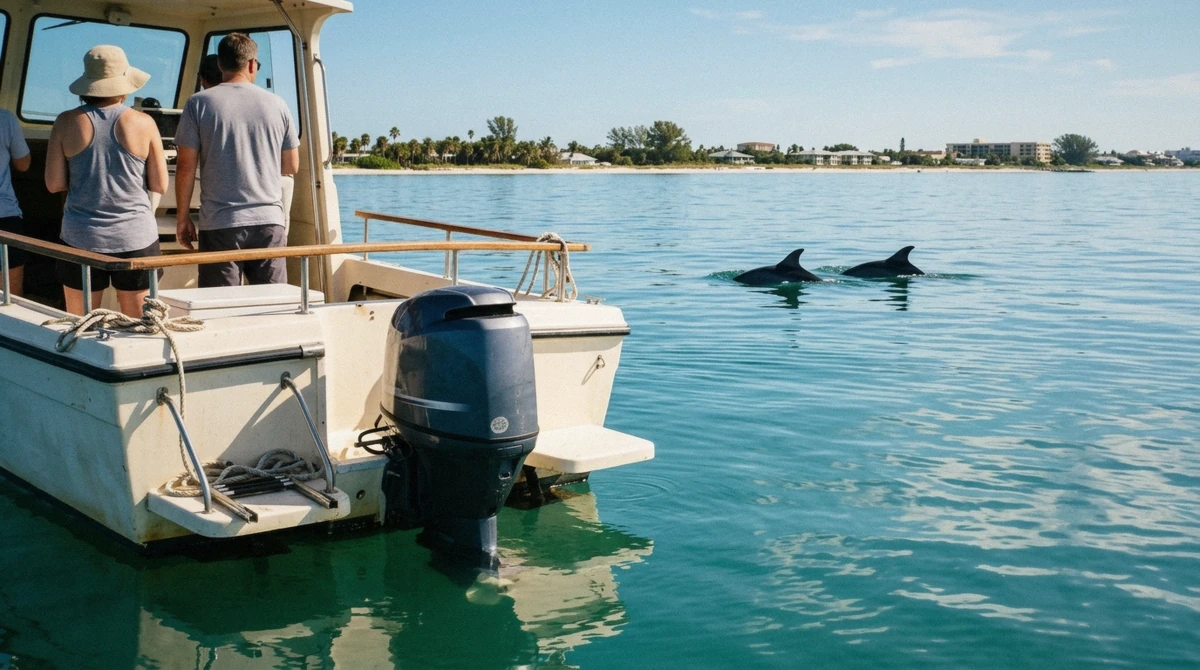
On a boat trip off this island, the legal version looks like this. The captain positions the boat near water where animals are working, cuts the throttle, and waits. If a pod comes to the wake and rides it, that is the animals' choice and the photograph everyone wanted. If they move off, the boat does not follow them around the bay.
On the kayak trip, guides ask paddlers to stop and hold position when an animal appears, precisely so the group does not drift into it. That is also why the trips do not advertise swimming: it is not available, at any price, from any operator here.
Judge an operation by how quickly the engine goes quiet. It is the single best proxy for whether a captain is working within the rules, and it happens to produce better sightings, because animals stay near a boat that is not chasing them. The dolphin tours working within these rules all work this way, and the same standard applies to what a paddler may and may not do.
Why This Matters More Here Than Most Places
The dolphins off Anna Maria Island are not anonymous animals passing through. They belong to a resident community that has been studied continuously since 1970, the longest-running study of a wild dolphin population anywhere, and researchers recognise nearly every individual on sight. Six generations are catalogued, and some animals are in their sixties.
So a dolphin harassed off this island is usually a known animal with a documented life history, a mother with a named calf, part of a small population that cannot absorb much pressure. That is not sentiment; it is the reason the rules here are enforced by captains as much as by agencies.
Manatees carry the same federal protection plus Florida's own Manatee Sanctuary Act, and the same look-only rule applies. The only sanctioned in-water manatee encounters in the state are in Citrus County, roughly two hours north, under passive-observation rules. Where the manatees gather locally is a separate guide, and every spot on it is watch-from-land or watch-from-a-boat.
None of this makes a trip here less rewarding. It makes it honest: two hours of watching wild animals decide whether to come over, with a captain who knows where they feed and keeps the legal distance while they do it.
What to Do When It Happens to You
If A pod appears while your boat is moving
Say nothing and let the captain work. They will come off the throttle and hold position
If A dolphin approaches your kayak
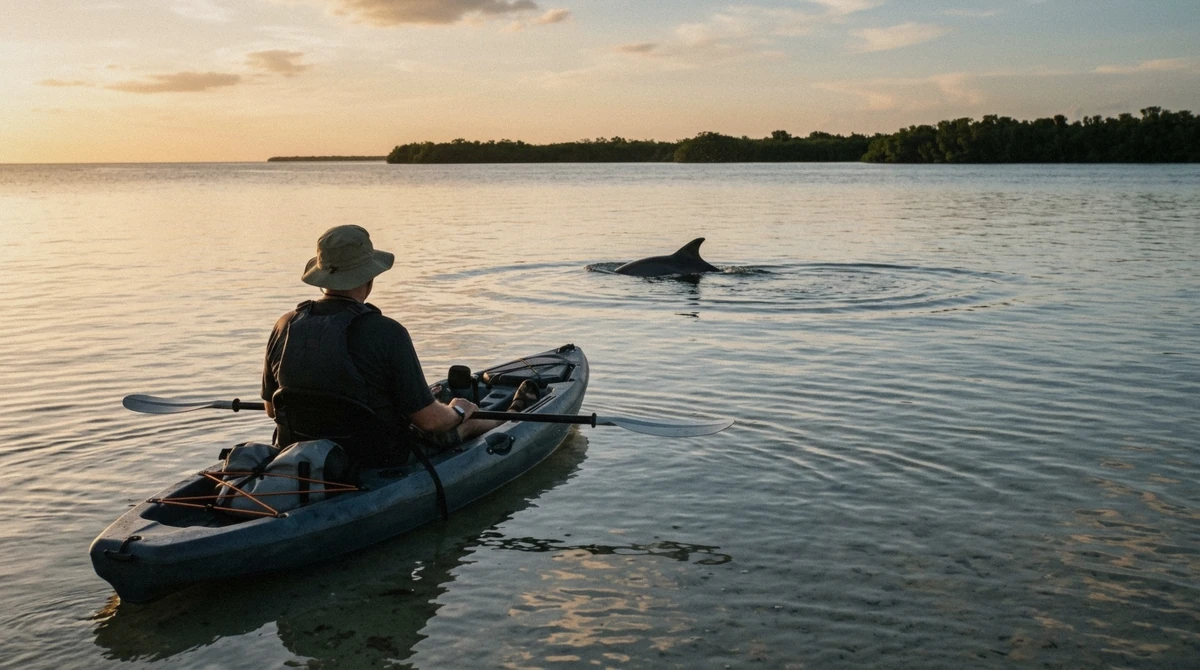
Stop paddling, rest the paddle across the deck and stay still. Let it choose the distance
If You are swimming at a beach and dolphins pass
Stay where you are. Moving toward them turns a coincidence into pursuit
If Someone offers to feed them to bring them closer
Decline. Feeding is specifically illegal and it is what gets animals killed by propellers
If You are on a rented boat with no guide
50 yards, engine in neutral if they approach, never cut across a pod's path
If You want an in-water encounter
A licensed captive facility is the only legal option in Florida, and it is a different experience entirely
How the Rules Play Out on a Two-Hour Trip
None of this makes for a worse morning on the water, which is the part visitors rarely believe until they have been out.
A boat that shuts off its engine and drifts is quieter, steadier and better for photographs than one chasing fins around a bay. Animals that are not being pursued behave normally: feeding, socialising, pushing calves along, occasionally coming over to inspect the hull on their own initiative. The best sightings we have had off this island all happened while the boat sat still.
The legal frame also explains why nobody here sells the thing search engines keep suggesting. If an operator anywhere on this coast offers to put you in the water with wild dolphins, they are offering to break federal law with you aboard, and the same operator is probably cutting other corners you cannot see.
It also has nothing to do with when you go: the same rules apply in February and July, and the hour and the tide matter far more to what you actually see.
- Engine in neutral when animals are near, every time
- No approach closer than 50 yards under power
- No circling, no cutting across a pod's line of travel
- No feeding, no touching, no swimming, at any price
- Captains report each other, because the licences are visible and the water is small
Who enforces what
Three layers of authority overlap on this water, which is why the rules feel repetitive.
| Rule | Source | Applies to |
|---|---|---|
| No harassment of marine mammals | Marine Mammal Protection Act, federal | Dolphins, manatees, everywhere in US waters |
| Stay 50 yards from wild dolphins | Federal viewing guidance | Boats, kayaks, swimmers, paddleboards |
| No feeding or attempting to feed | Federal regulation | Everyone, including from piers and docks |
| Manatee protection zones and idle speed | Florida Manatee Sanctuary Act, state | Vessels in posted zones, mostly in winter |
| Responsible-viewing habits | Dolphin SMART standard, voluntary | Operators who sign up to it |
Questions About the Law
Is it illegal to swim with wild dolphins in Florida?
Effectively yes. The Marine Mammal Protection Act prohibits harassment of wild marine mammals, and federal wildlife authorities treat swimming with, feeding or pursuing wild dolphins as harassment. No operator on this coast can sell it legally.
Is there anywhere in Florida you can swim with dolphins?
At licensed captive facilities with trained animals, yes. Those are regulated attractions, not encounters with wild populations. There is no legal wild-dolphin swim anywhere near Anna Maria Island.
What counts as harassment?
Any pursuit or act with the potential to disturb an animal's normal behaviour, including feeding, breeding and sheltering. In practice: closing the distance yourself, feeding, touching, circling, or getting in the water to reach an animal.
What are the penalties?
Fines up to $100,000 and up to a year in jail, prosecuted civilly or criminally. For a visitor, the more likely consequence is a trip ended early for everyone on board.
What if a dolphin swims up to my kayak?
That is legal, provided you stayed still and let it choose. Stop paddling, hold position and let the animal set the distance. Paddling toward it turns a legal encounter into an offence.
Can a boat let dolphins ride its wake?
Yes. Animals that choose to ride a wake are doing so on their own terms, which is why captains here cut the throttle and wait rather than steering into a pod. What a boat may not do is chase, circle or cut across the animals' path.
Why is feeding treated so seriously?
Because it changes behaviour permanently. Fed dolphins beg, lose their wariness of boats, approach propellers and take baited hooks, and they teach their calves to do the same. It is the single most damaging thing a visitor can do here.