Where to See Dolphins on Anna Maria Island for Free
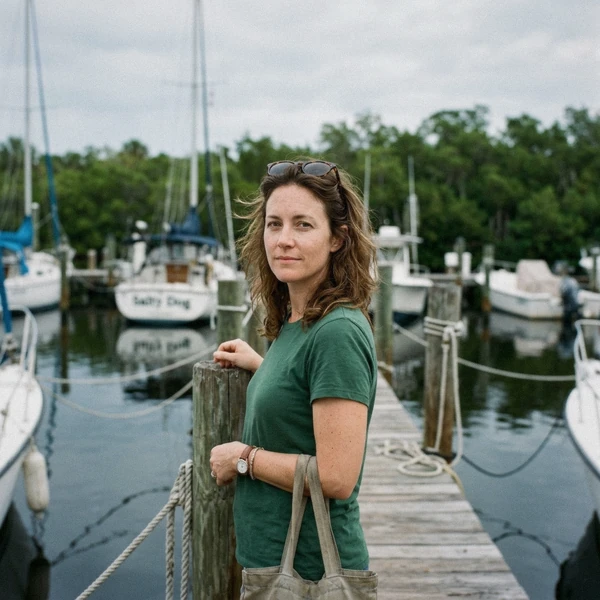
The honest answer to where to see dolphins Anna Maria Island visitors ask about most is that you do not need a boat at all. The bay side of this island is shallow, busy with bait and lined with piers, and the dolphins that live here never leave. We have watched them from nine free spots between Bean Point and Longboat Pass, and this is what each one is actually good for, as of July 2026.
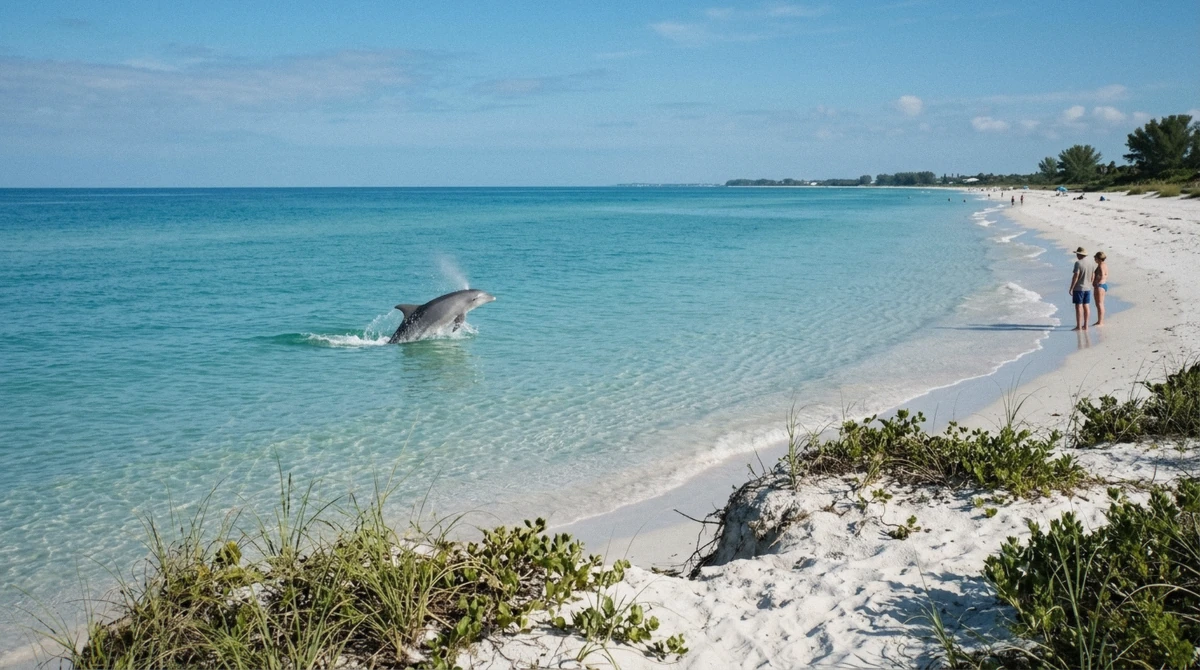
Quick answer
You can see dolphins from shore on Anna Maria Island in any month, because the Sarasota Bay population lives here year-round rather than migrating through. The most reliable free vantage points are the Anna Maria City Pier, the Rod & Reel Pier and the Longboat Pass bridge, all of which sit over moving water where dolphins hunt. Bring patience: shore watching means twenty quiet minutes, not a guaranteed pod in the first five.
Key takeaways
- Free and reliable: Anna Maria City Pier at Bayfront Park, over the deep bay channel
- Best on a falling tide: Longboat Pass, where bait funnels through a narrow gap
- Cheapest paid option: Rod & Reel Pier, about $2 to fish and nothing to walk on
- Free parking: Coquina Beach bayside and the whole Palma Sola Causeway
- Best combined with a walk: Robinson Preserve, 682 acres with a 40-foot tower
- What a boat buys instead: distance covered and a first pod usually within about 15 minutes
Can You Actually See Dolphins From the Beach?
Yes, and more often than most visitors expect. The reason is that these animals are resident rather than migratory: the same families work this bay every month of the year, so there is no closed season and no month when the water is empty.
What changes is the effort. From a boat, a captain reads bird activity and bait and drives to it. From a railing, you wait for the animals to come past you. In our experience that means somewhere between five minutes and half an hour of scanning, and the people who fail are almost always the ones who look for two minutes and leave.
One practical note before the spots. A dorsal fin that surfaces three times in a slow rolling arc is a dolphin. A single triangular fin that cuts the surface and stays up without rolling is usually a shark, and both are common in this water. Neither is a reason to get out of the shallows in a hurry, but knowing the difference saves a lot of misidentified photographs.
The Nine Free Spots, Mapped
Piers, passes and preserves where dolphins pass close to shore. Pins are the vantage point rather than the parking, which is noted per spot below.
The Spots at a Glance
Nine places, ranked by how often we have actually seen animals from them rather than by how pretty they are.
| Spot | Cost | Parking | Best at | Good for |
|---|---|---|---|---|
| Anna Maria City Pier | Free | Bayfront Park lot, fills by 10am | Any tide | The deep channel, dolphins and rays |
| Rod & Reel Pier | About $2 to fish, free to walk | Small lot on North Shore Drive | Morning | Close passes under the pier |
| Longboat Pass bridge | Free | Coquina bayside lots | Falling tide | Bait funnelling through the gap |
| Bradenton Beach City Pier | Free | Bridge Street, metered in season | Any tide | Level access, grass flats |
| Coquina Beach bayside | Free | Large free lot | Morning | Shade, picnic, a long scan line |
| Palma Sola Causeway | Free | Roadside the whole way | Falling tide | Water level, easy pull-off |
| Kingfish Boat Ramp | Free to watch | Ramp lot, busy weekends | Any tide | Channel traffic and passing pods |
| Robinson Preserve | Free | Free lot, opens dawn | Morning | Tower views, kayak launch |
| Bean Point | Free | Residential streets only | Morning | The tip where two bodies of water meet |
The Piers
Anna Maria City Pier
If you only have one hour, spend it here. The pier at Bayfront Park runs out from the north end of the island into water deep enough for the channel traffic, and that depth is the whole point: dolphins working the bay use the same edge that the boats do. Visitors report dolphins, manatees and stingrays from the railing regularly, and the walk out costs nothing.
Go early. The car park at Bayfront fills by mid-morning through the season, and the light before ten is better for spotting a fin at distance than the flat glare of midday.
Rod & Reel Pier
A small wooden pier at the north end with a restaurant on it, and the most charming of the three. Fishing costs about $2 a person and walking out costs nothing. Pelicans work the pilings, and dolphins, manatees and rays pass underneath close enough that you are looking down at them rather than across at a distant fin.
The trade-off is size. It is short, it gets busy, and on a weekend in season you are sharing the railing with anglers whose lines you should stay clear of.
Bradenton Beach City Pier
On the bay side at the south end, free, flat and the easiest of the piers for a wheelchair or a pushchair. It sits over shallow grass flats rather than deep channel, so the sightings skew toward rays, wading birds and the occasional manatee snout, with dolphins cutting past in the deeper water further out. Bring binoculars here and it becomes a much better spot than it first looks.
The Passes and the Causeway
Longboat Pass
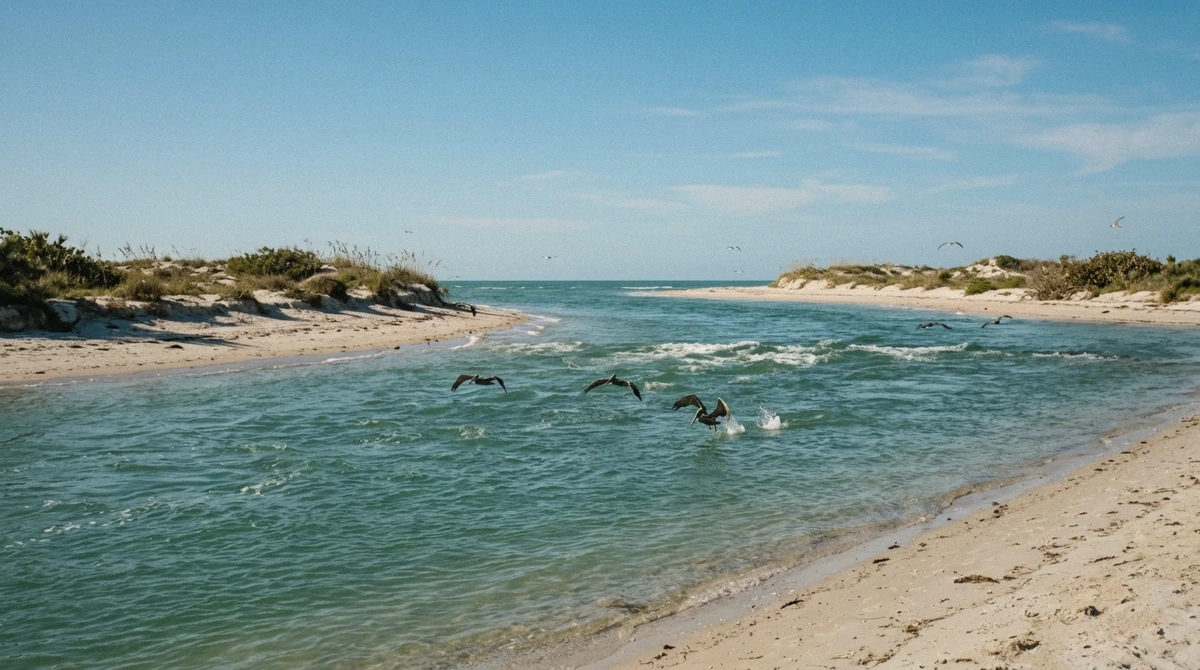
The gap between Coquina Beach and Longboat Key is the best free vantage point on this coast, and the reason is plumbing. A whole bay's worth of water squeezes through a narrow channel twice a day, dragging bait with it, and dolphins queue up to work the moving edge.
The timing matters more here than anywhere else on the list. A falling tide beats slack water every time. Park in the free bayside lots at Coquina, walk up onto the bridge sidewalk, and give it twenty minutes. If nothing shows on a moving tide here, nothing is showing anywhere that day.
Palma Sola Causeway and Kingfish Ramp
Manatee Avenue West crosses Palma Sola Bay on a causeway with free roadside parking along its whole length, which makes it the easiest stop on the island chain: pull off, stand at the water's edge, scan. This is also the bay the private charter runs out of, so the same water gets worked from a boat and from the verge.
Kingfish Boat Ramp sits on the same stretch. It is a working ramp rather than a scenic spot, but the seawall gives you a clear view of the channel, and dolphins follow boats through it often enough that watching the launch queue is not a waste of an hour.
The Preserves
Robinson Preserve
In northwest Bradenton, ten minutes from the bridge, 682 acres of restored coastal wetland with free entry, a 40-foot observation tower and kayak launches onto the same water the tour boats work. It is the one spot on this list where the dolphin sighting is a bonus rather than the point: you come for the trails, the wading birds and the view from the tower, and the fins turn up in the creeks.
Go at opening. The tower is quiet then, and the light across the flats is worth the early alarm on its own.
Bean Point
The northern tip of the island, where Tampa Bay meets the Gulf and the water changes colour along a visible line. It is beautiful, it is the first place the morning boats work, and it has one real problem: there is no car park. Access is on foot from residential streets a few blocks back, and the neighbourhood is signed and enforced about where visitors may leave a car.
Walk in, take the long view north across the bay mouth, and treat the dolphins as the reward for the effort rather than the reason for the trip.
Which Spot Suits Your Morning
If You have one hour and no car
Anna Maria City Pier at Bayfront Park, and walk to the far end
If You want the highest odds and can time a tide
Longboat Pass on falling water, from the bridge sidewalk
If You are travelling with small children
Coquina Beach bayside, where shade, toilets and a picnic table sit behind you
If Someone in the group uses a wheelchair
Bradenton Beach City Pier or the Palma Sola Causeway verge
If You want a walk as well as wildlife
Robinson Preserve at opening, tower first
If You have already tried two mornings and seen nothing
Take a boat. Two hours of a captain reading the water beats another dawn of scanning
Shore Watching Against a Boat, Honestly
We are an affiliate guide, so treat this section with the appropriate suspicion and then check it against your own morning. Shore watching is free, it works, and on a good tide at Longboat Pass it can be better than a mediocre boat trip.
What a fare buys is not access to the animals; it is ground covered. A two-hour trip works the back bay, the Longboat shoreline and out into the Gulf, following bait and birds rather than waiting for luck, and reviewers regularly report a first pod within about 15 minutes of leaving the dock. Prices start at $55.20 per person. Set against a free pier, that is what you are paying for: somebody else's search time and a much larger search area.
The sensible plan for a week on the island is both. Give a pier an early hour on your first morning, and if the week's weather looks like turning, put the guided dolphin tours that leave from these same docks on a day you can still cancel. If you would rather stay on land entirely, nothing here is a hard sell: the piers are free tomorrow too.
Free against paid, in one table
Same animals, same bay, two very different ways of meeting them. Last verified July 2026.
| From shore | From a boat | |
|---|---|---|
| Cost | Free, or about $2 to fish a pier | From $55.20 per person |
| Search area | One fixed point | Back bay, Longboat Key and open Gulf |
| Typical wait | Five to thirty minutes of scanning | First pod often within about 15 minutes |
| Who finds the animals | You do | A captain reading bait and birds |
| Distance | Whatever the animals choose | Whatever the animals choose, from closer water |
| Weather risk | None. Walk away and come back | Storms can cut a trip short in summer |
| Best for | Patient watchers with several mornings | Short trips and first-time visitors |
The rules apply from land as well
It is worth knowing that federal protection does not stop at the waterline. NOAA asks anyone watching wild dolphins to stay at least 50 yards away, and feeding one from a pier is as illegal as feeding one from a boat under the Marine Mammal Protection Act. Anglers here will tell you about dolphins that have learned to follow boats for scraps, and that is exactly the behaviour the rule exists to prevent.
Watch, photograph, and keep your bait bucket to yourself. The full picture of what is and is not allowed sits in its own guide.
What You Need, and What You Do Not
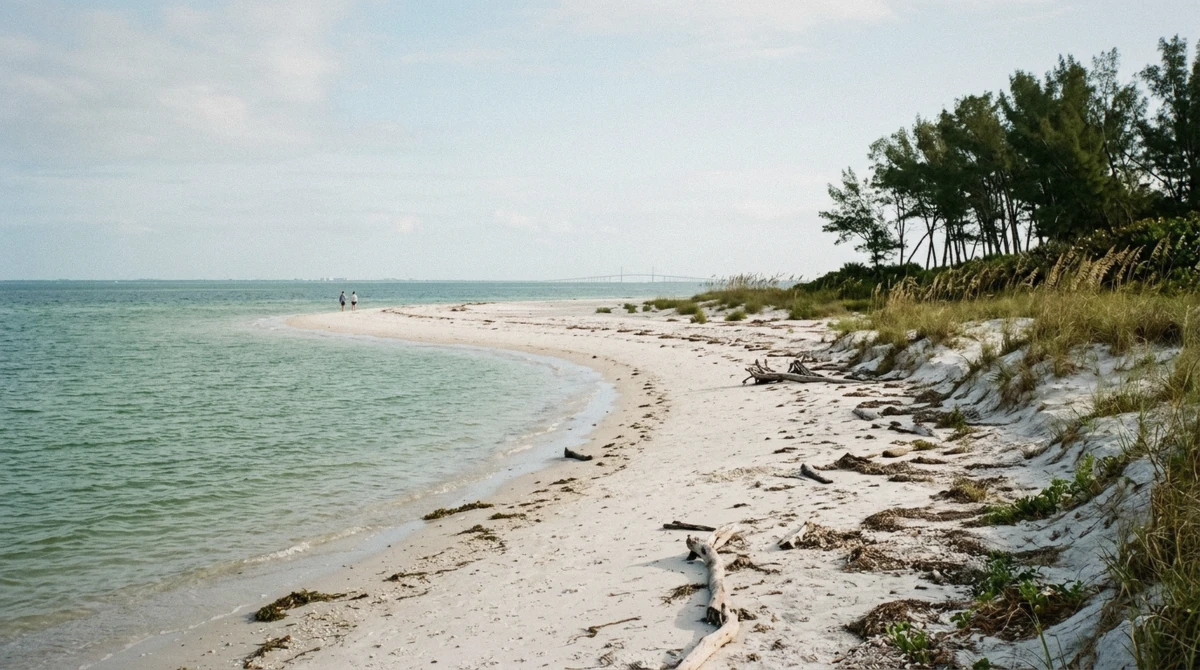
Shore watching needs almost nothing, which is the point. Still, four things separate a productive hour from a frustrating one.
Polarised sunglasses do more work than any other item. They cut the surface glare that hides a dorsal fin at two hundred metres and make rays and turtles visible in water that otherwise reads as blank green. Binoculars turn the two wide-water spots, Bradenton Beach City Pier and Coquina bayside, from mediocre into good. A tide table decides your hour at Longboat Pass. And patience is the actual requirement: give any spot twenty quiet minutes before you write it off.
What you do not need is a long lens, an early alarm every day of the week, or an app. Dolphins here are not a rare species being tracked; they are residents on a circuit, and the circuit passes these nine points.
- Polarised sunglasses, the single most useful item
- Binoculars for the wide-water spots
- A tide table for Bradenton Beach, free online
- Water and a hat, since none of these spots has shade over the railing
- Twenty minutes of patience per spot, not two
Reading the water
Birds first. A tight group of terns or pelicans working one patch means bait, and bait means predators underneath within a few minutes. Watch the birds rather than the water and you will see more dolphins.
Then the surface. A dorsal fin that rolls forward three times in a slow arc is a dolphin breathing. A single triangular fin that holds still on the surface is usually a shark. A flat boil with no fin at all is often a ray or a feeding fish school. And a grey shape that surfaces once, slowly, with a rounded snout rather than a fin is a manatee, which is a different animal on a different schedule entirely.
Questions About Watching From Shore
Can you see dolphins at Anna Maria Island without a boat?
Yes. The Sarasota Bay dolphins live here year-round, and they work the shallow bay side of the island where the piers, passes and causeways give you a free vantage point. The Anna Maria City Pier and the Longboat Pass bridge are the two most reliable.
Where is the best free place to spot dolphins?
Longboat Pass on a falling tide, from the bridge sidewalk above the gap between Coquina Beach and Longboat Key. Moving water pulls bait through a narrow channel and the animals follow it. The Anna Maria City Pier is a close second and needs no tide timing.
What time of day is best from shore?
Early morning, before the sea breeze puts chop on the water and before the glare flattens everything out. A calm surface is what lets you pick out a fin at two hundred metres. The wider question of when to go covers the month and the tide in detail.
How close do dolphins come to the piers?
Close enough at the Rod & Reel Pier that you are looking down on them rather than across at them, which happens several times a week rather than daily. At the City Pier they usually pass along the channel edge, so twenty to fifty metres out.
Do you need binoculars?
You do not need them, but a cheap pair turns the Bradenton Beach City Pier and the Coquina bayside from mediocre spots into good ones, because both look out over wide shallow water where the action happens further off.
Is it worth paying for a boat if the shore is free?
It depends on your patience and your week. A boat covers water you cannot reach and puts a captain who reads bait and birds in charge of finding animals, with trips from $55.20 per person. If you have three mornings free and enjoy waiting, the piers may be all you need.
Can you feed dolphins you see from a pier?
No. Feeding a wild dolphin is illegal under the Marine Mammal Protection Act, whether from a boat, a pier or a beach, and it is the single most damaging thing a visitor can do to the local population.